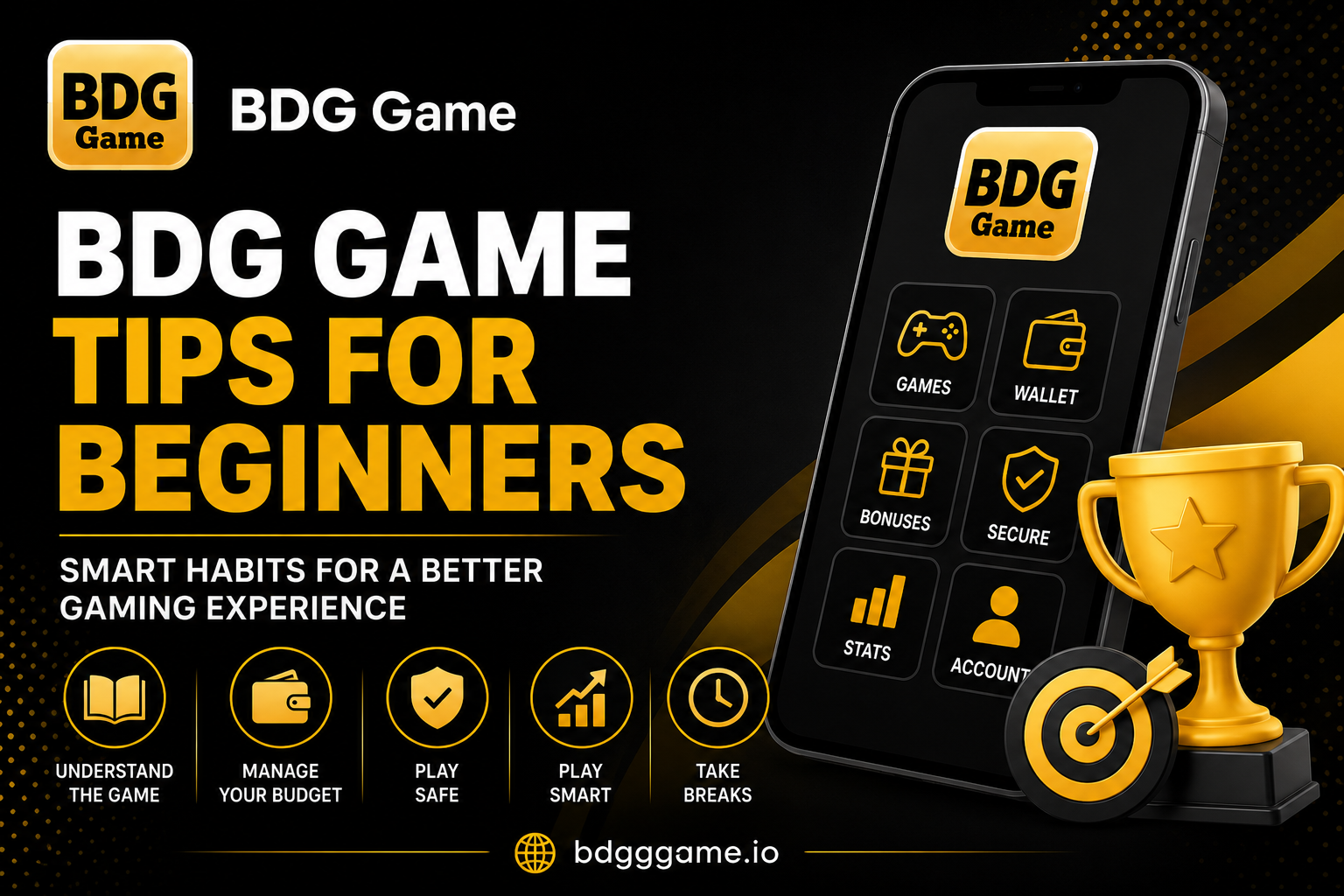
BDG Game Tips for Beginners: Smart Habits for a Better Gaming Experience
Starting with a new gaming platform can feel confusing when there are multiple game categories, account options, wallet features and different settings to understand.
Instead of looking for a secret trick or guaranteed winning method, beginners should first learn how the platform works, how individual games operate and how to manage their own usage.
This guide brings together practical habits that can make the overall BDG Game experience easier to understand and safer to manage. These suggestions cannot guarantee winnings or predict game outcomes. Results in games involving chance should never be treated as predictable.
Quick Tips at a Glance
| Area | Smart Habit |
|---|---|
| Game knowledge | Read the rules first |
| Spending | Set a personal limit |
| Game selection | Understand the game before participating |
| Losses | Never chase them |
| Time | Take regular breaks |
| Account | Protect password and OTP |
| Payments | Verify every transaction |
| Device | Keep your phone updated |
| APK | Check the source before installing |
| Support | Use legitimate support channels |
1. Understand the Game Before You Start
One of the most common mistakes beginners make is entering a game without understanding its rules.
Different games can have completely different mechanics. A player should know what actions are available, how rounds work and what the displayed information means before participating.
Before starting a new game, ask yourself:
- What are the rules?
- How is the result determined?
- Is the outcome based on skill, chance or both?
- What does each option on the screen mean?
- Are there any applicable terms or limits?
- What happens when a round ends?
A simple rule
If you don’t understand how a game works, don’t rush into it.
Spend a few minutes understanding the interface and rules first.
2. Don’t Confuse Previous Results With Future Results
This is particularly important for prediction-style or chance-based games.
A previous result does not automatically determine the next result.
For example:
| Previous Result | What It Means |
|---|---|
| Red | The next result is not guaranteed |
| Green | The next result is not guaranteed |
| Win | Doesn’t guarantee another win |
| Loss | Doesn’t guarantee the next result will be a win |
Avoid thinking:
“It happened several times, so the opposite must happen next.”
That assumption can lead to unnecessary decisions.
3. Set Your Limit Before Opening the Game
If an activity involves spending money, decide your personal limit before you begin, not after you have already started.
A simple approach is:
Decide → Set Limit → Play → Stop
Don’t increase the amount simply because you have already spent your original budget.
Budget checklist
Before participating, ask:
Can I afford this amount?
Would losing it affect my essential expenses?
Have I already reached my personal limit?
If the answer to the last question is yes, stop.
4. Never Chase a Loss
Trying to recover a previous loss by immediately increasing the amount is one of the most important habits to avoid.
Imagine:
Loss ↓Increase amount ↓Another loss ↓Increase again ↓Greater financial risk
Instead:
Loss ↓Stop ↓Take a break ↓Review your limit ↓Make a calm decision
A previous loss does not create an obligation to continue.